
Strengthen how projects are developed in shared space.

Projects are not only shaped by engineering, finance, and planning.
They are shaped by how decisions are made in shared space.
ELSA provides a structured way to:
- Understand where issues are forming
- Take action at the right time
- Build a more effective approach across projects
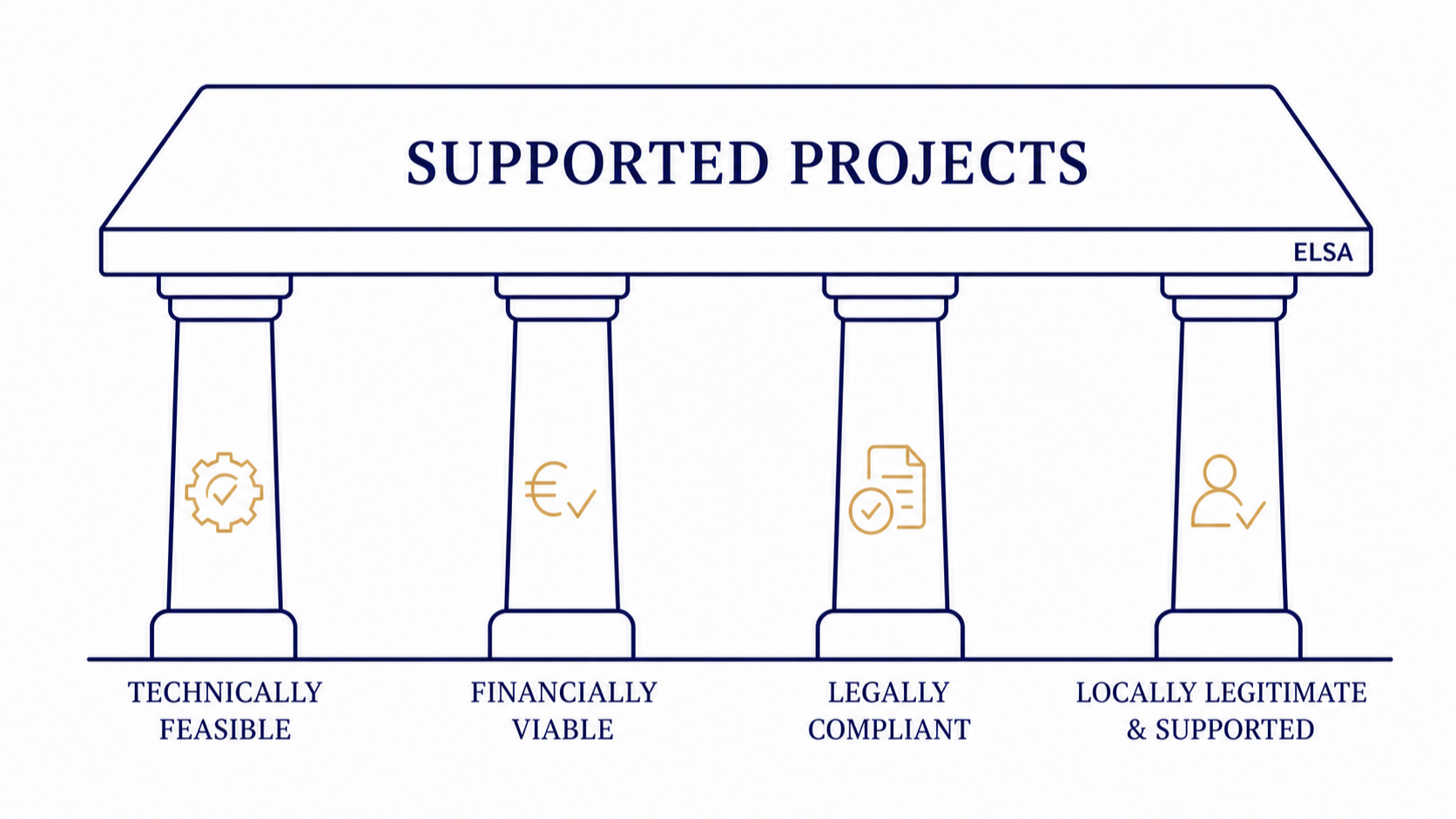
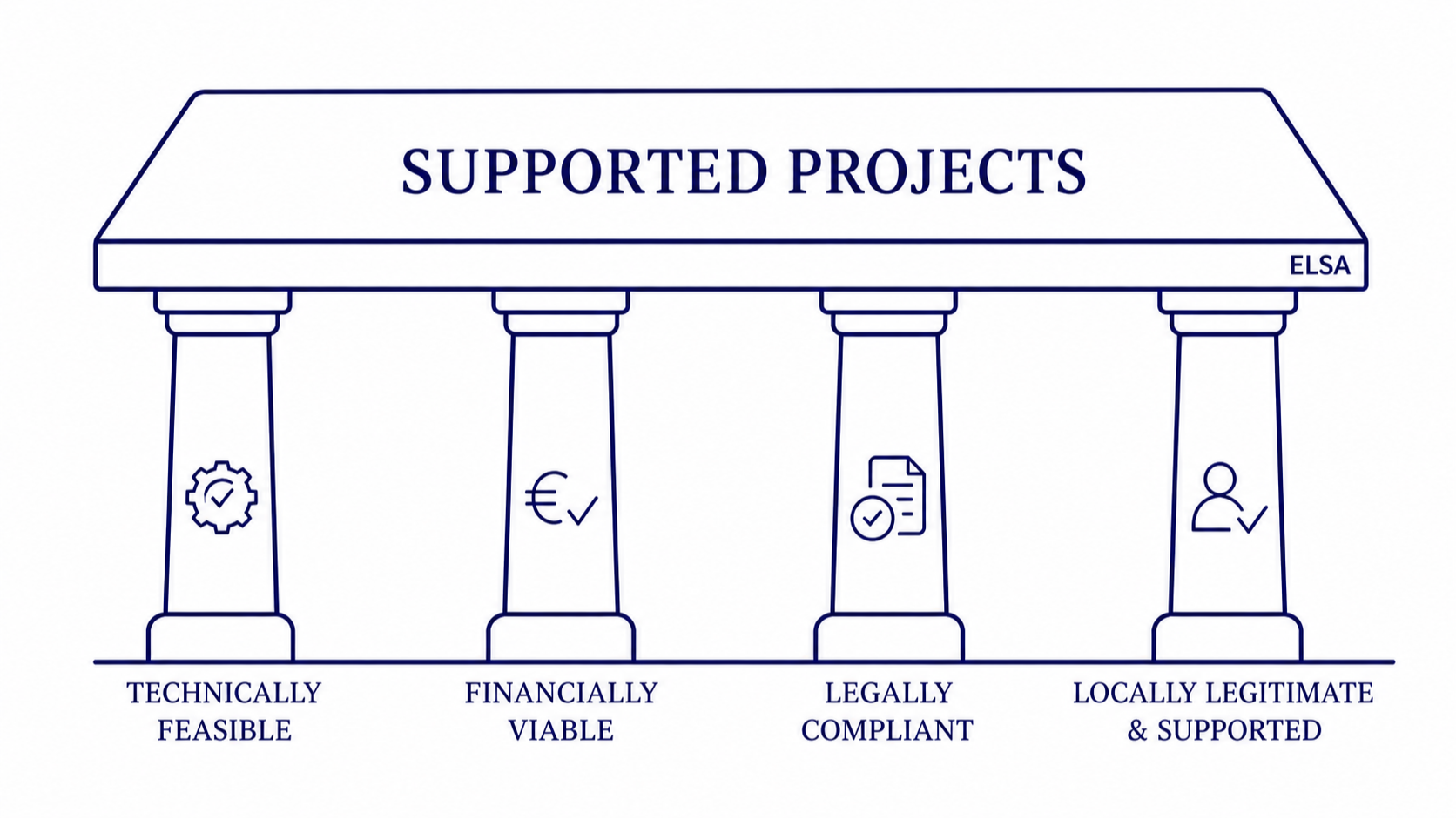
The fourth pillar – local legitimacy and support – does not just sit alongside the others.
It enables them to function more smoothly.
Is ELSA right for your project?
ELSA is most useful when a project is still being shaped, and there is an opportunity to strengthen the conditions for local support early.
It is particularly relevant when:
- a project is in the pipeline and will be developed in shared space
- key design decisions are being made without clarity on local community perspectives or risk
- there is no shared strategy within the project team for building local support
- internal alignment is still forming across developers, advisors and authorities
- local stakeholders are beginning to voice early concerns or questions
- there is awareness, from experience or observation, of how similar projects can become delayed, contested or fail
ELSA helps organisations address these risks while there is still room to shape both the project and its relationships constructively.
Three ways to start with ELSA

Assess

Apply

Learn
Assess
Begin by examining a specific project exposed to early-stage social risk such as local opposition.
Through structured advisory support, the Board and Executive team understand what’s happening and what needs to change – before it escalates.

Executive Strategy
Align leadership before positions harden.
Build a shared language across your leadership team, strengthen internal readiness, and make faster, clearer decisions on how your project approach needs to evolve, early enough to shape outcomes.
Explore Executive Strategy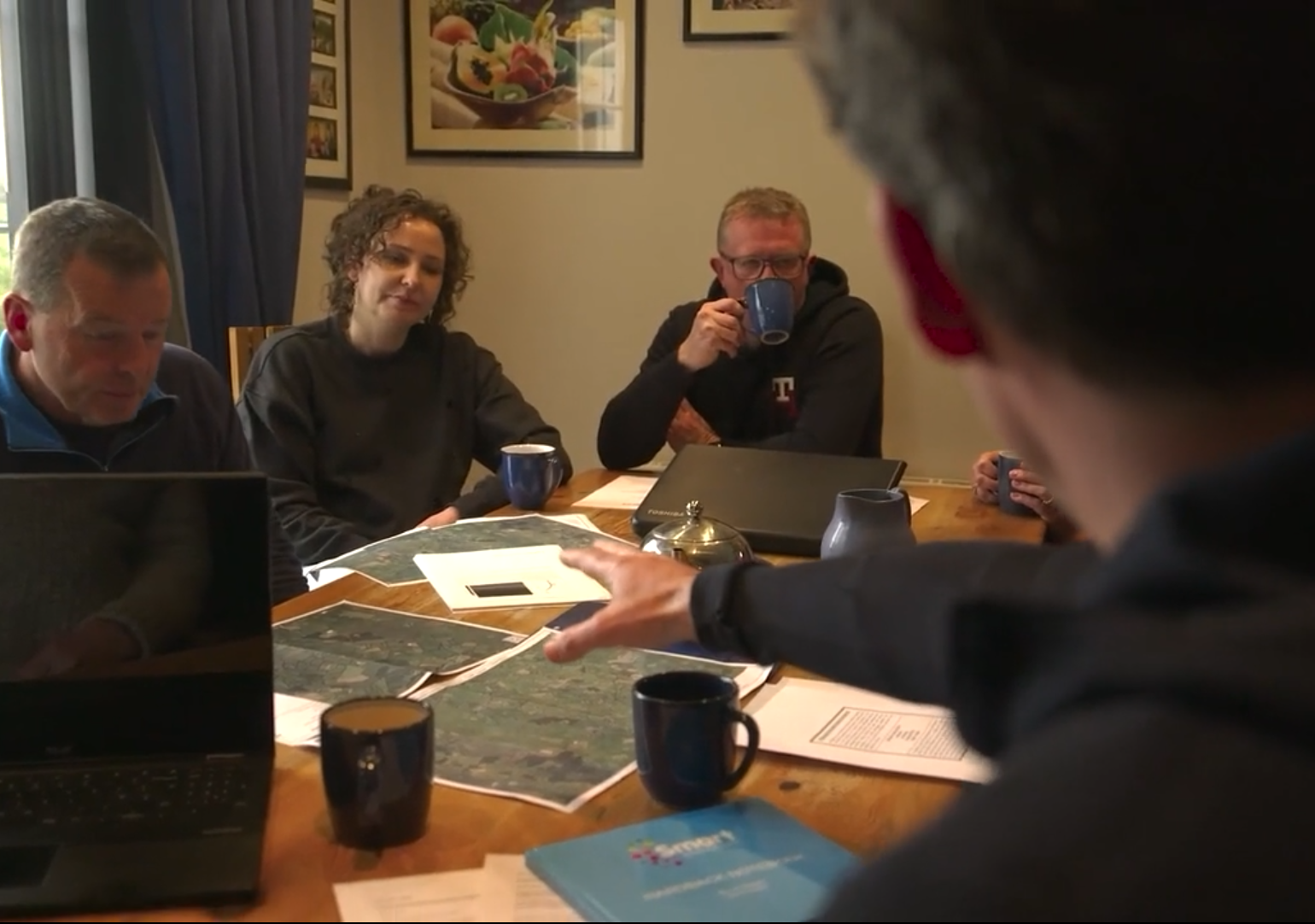
Early Social Risk Diagnostic
Understand the risk before it becomes resistance.
Identify what’s driving local risk – and what needs to change in timing, design, governance and engagement – so you reduce late-stage conflict and move forward with a clearer, more locally supported project approach.
Explore Early Social Risk DiagnosticApply
You are ready to move beyond diagnosis into practice, but need support to redesign the approach, build credibility, and apply AT PACE on a real project while capturing learning and proof.
ELSA Project Partnership
Move from reactive engagement to structured collaboration.
Embed early collaboration into how your project is designed and delivered – strengthening trust and legitimacy, improving alignment, and building a repeatable approach you can apply across future projects.
Explore Project PartnershipLearn
ELSA Foundations CPD: Building the Fourth Pillar
Understand why local support now determines outcomes.
Build a shared foundation across your team – from how social risk forms in early design to what a stronger project approach requires – so you create alignment, shift mindsets, and prepare for more structured next steps.
Explore Foundations CPD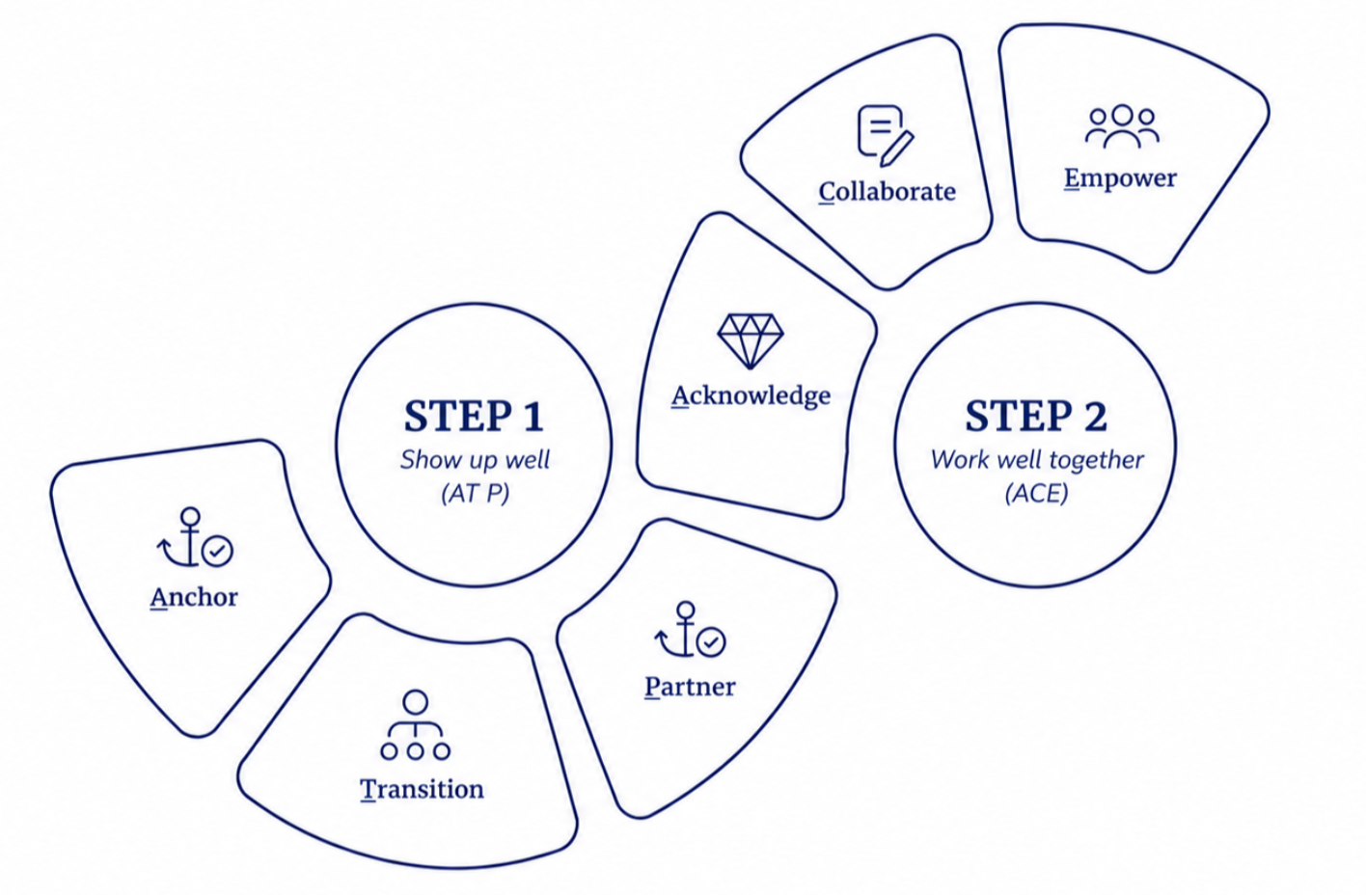
ELSA Applied CPD: AT PACE in practice
Turn understanding into practical capability.
Work through how AT PACE applies to real project decisions, sequencing, and behaviours – so your team can act with greater clarity, commit to first moves, and move from intention to implementation.
Explore Applied CPD
ELSA Specialist CPD: Designing for Social Durability
Strengthen how each role shapes project outcomes.
Build role-specific understanding of how everyday decisions influence trust, legitimacy, and local support – so teams align across disciplines and reduce unintended triggers of opposition.
Explore Specialist CPDHow to choose
Start with Advisory if:
- You’re working on a live project
- You need clarity before key decisions
- There are early signs of concern or risk
Choose CPD if:
- You want consistency across teams
- You’ve seen repeated issues
- You’re scaling project development
Every project is different – but the patterns are familiar.
A short conversation can help you decide where to start.
Request a conversation