From stalled to supported projects: changing the odds
Click the button below, put in your email address, and we will send you the ELSA guide.
Send me the guide
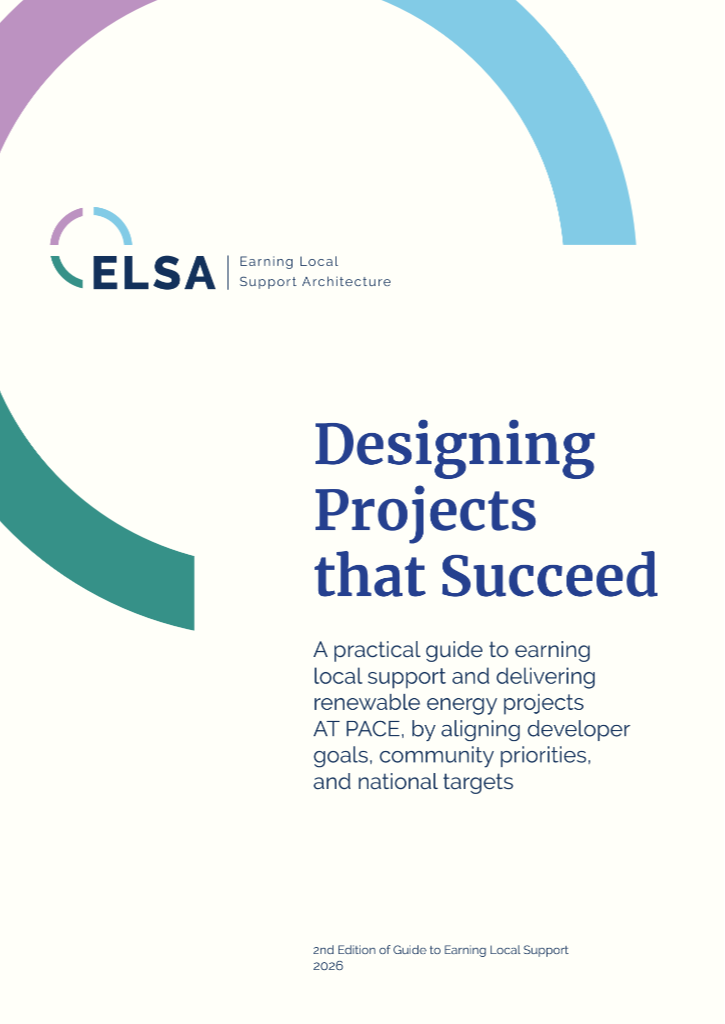

This guide is for project proponents seeking a stronger way to design projects in shared space
You’ve designed projects with technical precision, a strong business case, and regulatory alignment – yet some stall or collapse. Why?
Because they were planned for a 'technical' site, not with the people who live there.
This guide is:
- A road map for delivering projects that are not only technically sound, financially robust, and legally well prepared, but also responsive to how they are experienced locally – reducing social risk exposure and improving delivery certainty
- A clear explanation of how project teams can move from a Decide-And-Defend engagement model – to collaborative design that protects timelines, trust, and targets.
What you’ll take away
- Why even well-intentioned engagement efforts fail in today’s shared spaces – and what to do instead
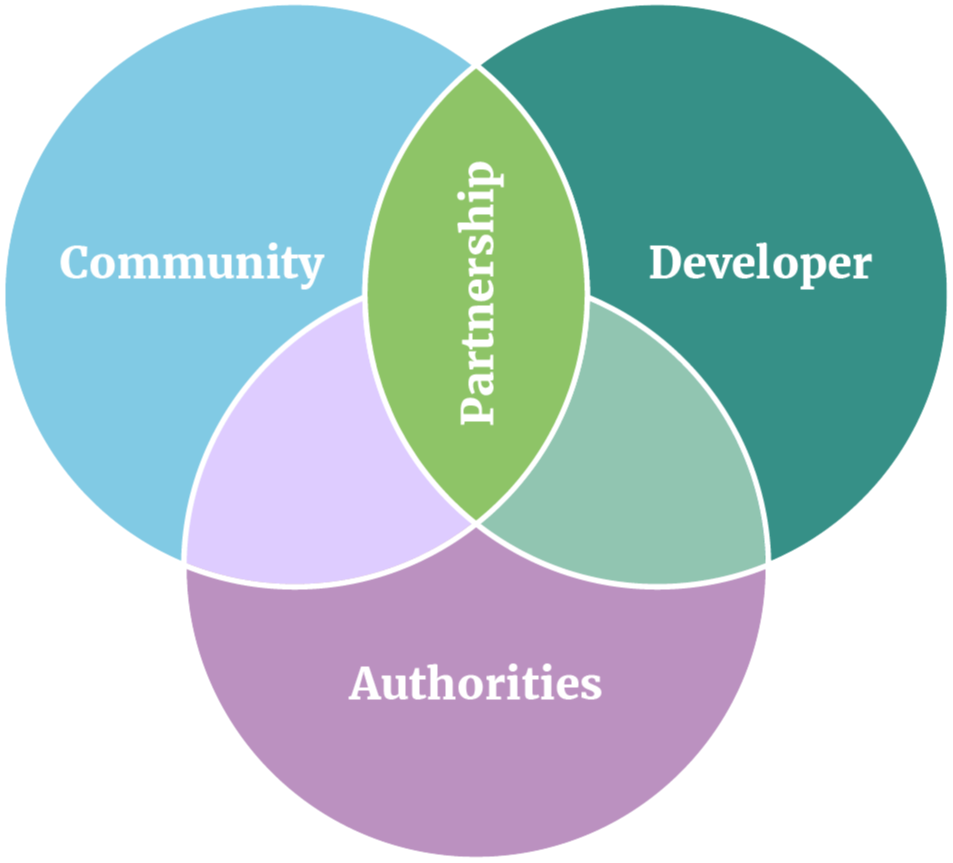
- The Projects AT PACE™ framework – a structured, tested process for intentionally developing the fourth pillar of project success: local legitimacy and support
- How to strengthen team readiness and engagement confidence, so you can show up well and work well with all your stakeholders
- Real-world case studies showing what works, what doesn’t, and why, across diverse projects and contexts.
Based on:
- 35 years of developing natural resource projects, including 20 years of helping project teams and communities successfully navigate shared space challenges, of which
- 6 years of research developing and proofing Earning Local Support Architecture (ELSA), with financial support from the Sustainable Energy Authority of Ireland and peer review from national and international researchers (e.g. within International Energy Agency Research Tasks).
Is this worth your time?
Definitely if:
- You’re leading or advising project development in shared space
- You know the value of a robust social license
- You’re not looking for shortcuts – you're looking for a better project delivery system
- You want your team (and investors) aligned on what is required to ensure project delivery in shared space
- You want more delivery certainty and less fire fighting
Why we wrote the guide
As energy demand grows, there is increasing pressure to deliver more renewable – and other – energy projects quickly and at scale.
But, to be successful, that pressure should not fall unfairly on the communities hosting those projects.
Too often, projects that are strong on paper still run into opposition, delay, or failure – not because they are technically or financially weak, but because they are not well aligned with the places they are built.
Through our work across many projects, we have seen that when projects are designed differently – with local realities understood and addressed early – both developers and communities benefit.
We have also seen that this approach is still used in too few projects.
This guide was written to change that by providing a practical framework to help teams design projects that are:
-
better aligned with local context
-
more likely to move forward successfully
-
and deliver with greater certainty
The result is a meaningful reduction in delay and failure risk – helping move outcomes from disruption and misalignment in shared space towards more consistent, supported delivery, and enabling the energy transition and its host communities to gain momentum, resources, and resilience.
Why we give this guide for free
This approach isn’t for everyone. If the standard model is working for you – great.
But if it’s not – or you would like an upgrade – this guide will help you figure out what needs to change.
At ELSA, we give this guide for free as it enables the reader to screen if they would benefit from working with us going forward.
For further insights on what the benefits of following this guide are, please see The Business case for Collaborative Design.
What happens when you enter your e-mail address
- You immediately get the link to the guide on your email (please check your spam folder if you don't, or write to elsa@astoneco.com and we will assist you).
- In the same email, you can opt-in to receive related insights, if you choose to.
- Every project is different – so if you want to talk about your project(s) after reading the guide, we’ll be here.
Who is behind ELSA and the guide and why should you trust him?
John, ELSA’s lead creator, has helped tens of clients over the last 30 years, from junior companies to multi-million international corporations resolve local conflicts and sustainably build their social license through meaningful engagement.
He is the Co-Operating Agent of the International Energy Agency Wind Task 62 on social science and wind energy - where he also represents Ireland.
John was part of the expert team who created AA1000 Stakeholder Engagement Standards, one of the leading stakeholder engagement standards in the world.
John is also on UNDP’s international roster of conflict resolution experts, and a published author.